Coachbuilder
Template:Short description Script error: No such module "Distinguish". Template:DMCA

.jpg)

A coachbuilder is a person or organization that manufactures bodies for passenger-carrying vehicles.
The trade of producing coachwork began with bodies for horse-drawn vehicles. Today it includes custom automobiles, buses, motor coaches, and railway carriages.
The word "coach" was derived from the Hungarian town of Kocs.[1] A vehicle body constructed by a coachbuilder may be called a "coachbuilt body" (British English) or "custom body" (American English), and is not to be confused with a custom car.
Prior to the popularization of unibody construction in the 1960s, many independent coachbuilders built bodies on rolling chassis provided by luxury or sports car manufacturers, both for individual customers and makers themselves. Marques such as Ferrari originally outsourced all bodywork to coachbuilders such as Pininfarina and Scaglietti.
Today, the coach building trade has largely shifted to making bodies for short runs of specialized commercial vehicles such as motor coaches and luxury recreational vehicles. A 'conversion' is built inside an existing vehicle body.
Many renowned automotive coachbuilders have been based in Italy (carrozzeria) and France (carrosserie).
Terminology
Construction of specialty vehicle bodies has always been a skilled trade requiring a relatively lightweight product with sufficient strength. The manufacture of necessarily fragile, but satisfactory wheels by a separate trade, a wheelwright, held together by iron or steel tyres, was always most critical.
From about AD 1000 rough vehicle construction was carried out by a wainwright, a wagon-builder. Later names include cartwright (a carpenter who makes carts, from 1587); coachwright; and coachmaker (from 1599). Subtrades include wheelwright, coachjoiner, etc. The word coachbuilder first appeared in 1794.[2]
Horse-drawn vehicles
.jpg)
Script error: No such module "Labelled list hatnote".
Script error: No such module "labelled list hatnote". A British trade association the Worshipful Company of Coachmakers and Coach Harness Makers was incorporated in 1630. Some British coachmaking firms operating in the 20th century were established even earlier. Rippon was active in the time of Queen Elizabeth I, Barker founded in 1710 by an officer in Queen Anne's Guards. Brewster, the oldest in the U.S., was formed in 1810.[3]
Coach-building had reached a high degree of specialization in Britain by the middle of the 19th century. Separate branches of the trade dealt with the timber, iron, leather, brass and other materials used in their construction. And there were many minor specialists with each of these categories. The “body-makers” produced the body or vehicle itself, while the “carriage-makers” made the stronger timbers beneath and around the body. The timbers used included ash, beech, elm, oak, mahogany, cedar, pine, birch and larch. The tools and processes used were similar to those used in cabinet-making, plus other specific to coach-making. Making the curved woodwork alone called for considerable skill. Making the iron axles, springs and other metal used was the work of the “coach-smith,” one of the most highly paid classes of London workmen.[4] The coating of the interior of the coach with leather and painting, trimming, and decorating the exterior called for specialist tradesmen with a high degree of skill. Building carts and wagons required similar skills, but of a coarser kind.
Automobiles
From the beginning of the automobile industry, manufacturers offered complete cars assembled in their own factories commonly using entire bodies made by specialist people using different skills. Soon after the start of the twentieth century mass production coachbuilders developed such as Mulliners or Pressed Steel in Great Britain, Fisher Body, Budd, Briggs in the U. S., or Ambi-Budd in Germany. Many other big businesses remain involved.

Many coachbuilt chassis would come with all lights, standard instruments and their panel, engine cover, mudguards and running boards and spare wheel(s)Lua error in package.lua at line 80: module 'Module:Category handler/data' not found.[citation needed]
Specialist market sector
There remained a market for bodies to fit low production, short-run and luxury cars. Custom or bespoke bodies were made and fitted to another manufacturer's rolling chassis by the craftsmen who had previously built bodies for horse-drawn carriages. Bespoke bodies are made of hand-shaped sheet metal, often aluminum alloy. Pressed or hand-shaped metal panels were fastened to a wooden frame of particularly light but strong types of wood. Later many of the more important structural features of the bespoke or custom body such as A, B and C pillars were cast alloy components. Some bodies such as those entirely alloy bodies fitted to some Pierce-Arrow cars[5] contained little or no wood, and were mounted on a conventional steel chassis.
_pic1.JPG)
The car manufacturer would offer for sale a chassis frame, drivetrain (consisting of an engine, gearbox, differential, axles, and wheels), brakes, suspension, steering system, lighting system, spare wheel(s), front and rear mudguards (vulnerable and so made of pressed steel for strength and easy repair) and (later) bumpers, scuttle (firewall) and dashboard. The very easily damaged honeycomb radiator, later enclosed and protected by a shell or even reduced to an air intake, was or held the visual element identifying the chassis' brand. To let car manufacturers maintain some level of control over the final product their warranties could be voided if coachbuilders fitted unapproved bodies.
As well as bespoke bodies the same coachbuilders also made short runs of more-or-less identical bodies to the order of dealers or the manufacturer of a chassis. The same body design might then be adjusted to suit different brands of chassis. Examples include Salmons & Sons' Tickford bodies with a patent device to raise or lower a convertible's roof, first used on their 19th-century carriages, or Wingham convertible bodies by Martin Walter.
Ultra-luxury vehicles


Larger car dealers or distributors would commonly preorder stock chassis and the bodies they thought most likely to sell and order them for sale off their showroom floor.
All luxury vehicles during the automobile's Golden Era before World War II were available as chassis only. For example, when Duesenberg introduced their Model J, it was offered as chassis only, for $8,500. Other examples include the Bugatti Type 57, Cadillac V-16, Packard Twelve, Ferrari 250, Isotta Fraschini Tipo 8, Hispano-Suiza J12, and all Rolls-Royces produced before World War II. Delahaye had no in-house coachworks, so all its chassis were bodied by independents, who created their designs on the Type 135. For the Delahaye, most were bodied by Chapron, Labourdette, Franay, Saoutchik, Figoni et Falaschi, or Pennock.Lua error in package.lua at line 80: module 'Module:Category handler/data' not found.[citation needed]
The practice continued after World War II waning dramatically in the 1950s and 1960s. Rolls-Royce debuted its first unibody model, their Silver Shadow, in 1965.
Obsolescence
Separate coachbuilt bodies became obsolete when vehicle manufacturers found they could no longer meet their customers' demands by relying on a simple separate rolling chassis (on which a custom body could be built). Unibody or monocoque combined chassis and body structures began to become standardised past the midpoint of the 20th century to enhance rigidity to meet the demands of improved suspension systems, reduce weight, increase gas mileage, and importantly reduce manufacturing costs.
Independent coachbuilders survived for a time after the mid-20th century, making bodies for rolling chassis provided by low-production companies such as Rolls-Royce, Ferrari, and Bentley.[6] Producing metal body dies is extremely expensive (a single door die can run to US$40,000),Lua error in package.lua at line 80: module 'Module:Category handler/data' not found.[citation needed]Lua error in package.lua at line 80: module 'Module:Category handler/data' not found.Lua error in package.lua at line 80: module 'Module:Category handler/data' not found.[when?] which is usually only considered practical in large-scale mass production—though that was the path taken by Rolls-Royce and Bentley after 1945 for their own in-house body-on-frame production. Because dies for pressing metal panels are so costly, from the mid 20th century, many vehicles, most notably the Chevrolet Corvette, were constructed out of fiberglass-reinforced resin, which only require inexpensive molds made of any suitable materials that can stand the application of lightweight pliable materials in their uncured state, not stand up to the stress of being struck in a metal press. When cost is not a major consideration and weight-saving is of paramount importance, fiberglass has since been replaced by newer materials such as carbon fiber, if necessary hand-formed.
Unibody construction

The advent of unibody construction, where the car body is unified with and structurally integral to the chassis, made custom coachbuilding uneconomic. Many coachbuilders closed down, were bought by manufacturers, or changed their core business to other activities:
- Transforming into dedicated design or styling houses, subcontracting to automotive brands (e.g. Zagato, Frua, Bertone, Pininfarina)
- Transforming into general coachwork series manufacturers, subcontracting to automotive brands (e.g. Karmann, Bertone, Vignale, Pininfarina)
- Manufacturing runs of special coachworks for trucks, delivery vans, touring cars, ambulances, fire engines, public transport vehicles, etc. (e.g., Pennock, Van Hool, Plaxton, Heuliez)
- Becoming technical partners for the development of roof constructions (e.g., Karmann, Heuliez), for example, or producers of various (aftermarket) automotive parts (e.g., Giannini)
Gallery
-
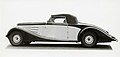 Pourtout drophead coupé on a Lancia Belna chassis 1935
 -
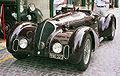 Touring 2-seater body on a 1938 Alfa Romeo 6C 2300B chassis
 -
 Fixed head coupé by Ghia 1954 on an Alfa Romeo 1900 SS chassis
 -
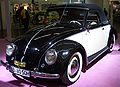 Hebmüller Cabriolet modifications upon a mass-produced Volkswagen platform chassis


List of automobile coachbuilders
Lua error in package.lua at line 80: module 'Module:Category handler/data' not found. Coachbuilders by nation have included:
Austria
Page Template:Div col/styles.css has no content.
- ABC Auto-Karosseriefabrik
- Armbruster
- Josef Breiter
- Carl Blaha & Söhne
- Karl Czerny
- Johann Grimas
- Franz Hanek
- Johann Heinrich
- Hölbl
- Template:Ill
- Kastenhofer
- Ferdinand Keibl
- Kohlruss
- Köllensperger
- Wilhelm Kübler
- Lohner
- Öffag
- Reichelt
- Template:Ill
- Brüder Schafranek
- Schreiner & Blaha
- A. Schwanzar
- Stadtherr & Klimesch
- Josef Swoboda
- Wiener Karosserie-Fabrik
- Weingartshofer & Griess
- Template:Ill
Belgium
Page Template:Div col/styles.css has no content.
- Auto-Carrosserie Nationale
- Bidée
- Bogaerts, Stoelen & Van Ouytsel
- Bousson
- Carrosserie Parisienne
- Colson
- Jacques Coune
- D'Ieteren
- De Mola
- De Ruytter
- De Wolf
- Delisse
- Dens
- Devaux
- Driessens & Oblin
- Feval
- Franeau
- Gamette
- Généraux
- Grümmer (Bruxelles)
- Jean Hackir
- Hofkens
- Joachim
- Jonckheere
- Lahaye
- Lefèvre & Heuvels
- Lilien
- Lorenz & Walch
- Louis Maes
- Matthys & Osy
- Meeussen
- Monchamps
- Navez
- Oblin
- Phlups
- Pritchard & Demollin
- Purnelle
- Seghers & Fils
- Snutsel
- Simons
- Sprengers
- TTT
- Vanden Plas
- Van Dun
- Van Hool
- Van Muylder
- Verhaest
- Verwilt
- Template:Ill
- Vogt & Demeuse
- Walch
China
Page Template:Div col/styles.css has no content.
Czech Republic
Page Template:Div col/styles.css has no content.
Denmark
Page Template:Div col/styles.css has no content.
- Aagaard
- Andreasen
- Asnæs
- Carsten Jakobsen
- Dansk Karosseri Fabrik
- Funder
- I. C. Hansen
- J.H. Jensen
- Næsby
- Nørrebros
- Odsherred
- Vesterbros
France
Page Template:Div col/styles.css has no content.
- Achard, Fontanel & Cie (Lyon)
- Ailloud & Dumond (Lyon)
- Alin & Liautard (Courbevoie)
- Amiot (Dinard, Dinan)
- André Roze
- Angé (Toulouse)
- Ansart & Teisseire (Neuilly)
- Antem
- Arthur Boulogne
- Aubertin
- Audineau
- Augereau (Brou)
- Autobineau (Neuilly)
- Baehr
- Bail (Paris)
- Baqué (Toulouse)
- Barbier (Cannes)
- Barou
- Bedel
- Belvallette Frères
- Bergeon & Descoins
- Berlioz & Gouillon (Paris)
- Berluteau (Melun)
- Bernin (Tours)
- Berton-Labourdette
- Besset (Annonay)
- Beuzelin
- Bigatti (Nice)
- Billeter & Cartier (Lyon)
- Binder
- Boneberge (Lyon)
- Bonneville & Chabrol (Toulouse)
- Boré (Saint-Lô)
- Botiaux
- Bourack & de Costier
- Brandone
- Breteau
- Broadwater
- Busson
- Candelaresi (Lyon)
- Carrier (Argenteuil, Alençon)
- Candelarési (Lyon)
- Carde & fils (Bordeaux)
- Chabrol (Toulouse)
- Chapelle & Jabouille
- Chappe et Gessalin, (Brie-Comte-Robert)
- Chapron (Levallois-Perret)
- Philippe Charbonneaux
- Chatellard (Toulouse)
- Chaussende (Lyon)
- Chausson (Asnières, Gennevilliers)
- Chavet
- Chéreau (Avranches)
- Chesnot
- Chicot (Levallois)
- Chilbourg (Paris)
- Clabot (Alfortville)
- Crouzier
- Currus
- Darl'mat (Paris)
- Declerq & Cordonnier (Lille, Roubaix)
- De Corvaia
- DeCostier (Boulogne s/Seine)
- Decultil & Cie (Lyon)
- Delaroche & Turquet (Le Mans)
- Delaugère (Orléans)
- Deloche (Paris)
- Derouault & Jongen
- Desouches, David & Cie (Pantin)
- Desvaux (Rueil)
- De Villars
- Di Rosa (La Garenne-Colombes)
- Drouet & Gaucher (Courbevoie)
- Driquet
- Maurice Dumas (Bordeaux)
- Louis Dubos (Neuilly)
- Dubos (Puteaux)
- Duchesne
- Duhamel et Compagnie (Paris)
- Durisotti
- Dupont
- Duval
- Duvivier (Levallois-Perret)
- Ehrler (Paris)
- Ehmgard et Delbenque (Paris)
- Esclassan – Tôlerie automobile et industrielle (Boulogne s/Seine)
- Facel-Métallon (Dreux)
- Faget & Varnet (Levallois)
- Faurax (Paris since 1808, later Lyon)
- Faurax & Chaussende (since 1920, Lyon)
- Felber frères (Puteaux)
- Fernandez & Darrin (Paris)
- Figoni et Falaschi (Boulogne s/Seine)
- Firmin (Paris)
- Fleury (Thonon)
- Floquet (Saint-Amand)
- Forrler (Strasbourg)
- Fournier (Bordeaux)
- Fournier (Suresnes)
- Franay (Levallois-Perret)
- Frugier (Toulouse, Limoges)
- Gallé (Boulogne s/Seine)
- Gangloff (Colmar)
- Garros (Toulouse)
- Gaston Grümmer
- Gaudichet & Turquet (Le Mans)
- Henri Gauthier (Villeurbanne)
- Gilotte (Courbevoie)
- Girardo frères (Cannes)
- Grange frères (Valence-sur-Rhône)
- Gras (Dijon)
- Gruau (Laval)
- Guilloré
- Léon Hanovre (Paris)
- Hénon (Albert)
- Henry (Nancy)
- Heuliez (Cerizay)
- Hibbard & Darrin (Paris)
- Carrosserie Industrielle
- Jamet (La Guerche, Berry)
- Jeanteaud (Paris)
- Jouan, carrosserie de cuirs (Clichy)
- Jousse & Parsy (Montargis)
- Justrobe (Toulouse)
- Kellner (Paris)
- Kelsch (Levallois)
- Klapper (Toulouse)
- Kraemers fils (Paris)
- Labarre (Evreux)
- Labbé (Lamballe)
- La Carrosserie Industrielle (Courbevoie)
- Lacoste frères (Toulouse)
- Lagache & Glaszmann (Montrouge)
- Lagogué (Alençon)
- Template:Ill (Vonnat)
- Lamplugh & Cie (Levallois-Perret)
- Lavocat & Marsaud
- Letourneur et Marchand (Neuilly)
- Le Vieux (Paris)
- Lourtioux (Montluçon)
- Mamy (Besançon)
- Mandement (Toulouse)
- Manessius (Puteaux)
- Maron-Pot (Levallois-Perret)
- Massias (Toulouse)
- Mercier (Toulouse)
- Meulemeester (Clichy)
- Michel (Nice, Marseille)
- Million-Guiet
- Monjardet (Besançon)
- Montel & fils (Marseille)
- Morel (Paris)
- Morin (Parthenay)
- Morin (Rennes)
- Mühlbacher & fils (Puteaux)
- Nicolas (Angoulême)
- Ottin (Lyon)
- Paul Née
- Philippe Mühlbacher (Toulouse)
- Pelpel (Noyal s/Vilaine)
- Petitprez & Verschure (Tourcoing)
- Pezet (Toulouse)
- Phaetonia (Courbevoie)
- Plante (Pau)
- Poinsenet (Epernay)
- Pourtout (Rueil-Malmaison)
- Pralavorio Simon (Lyon Montplaisir)
- Privat (Dijon)
- Pruneville (Lyon)
- Radovitch (Reims)
- Rambert & fils (Clermont-Ferrand, Courbevoie)
- Raquin (Montrichard)
- Rasp (Paris)
- Ravistre & Martel (Annonay)
- Repusseau & Cie (Levallois-Perret)
- Rétif (Sancoins, Berry)
- Rheims & Auscher, La Carrosserie Industrielle (Levallois-Perret)
- Rousseau (Montargis)
- Rungette (Levallois-Perret)
- Saoutchik (Neuilly)
- Soulé (Toulouse)
- Spinnewyn (Tourcoing)
- Surirey (Flers)
- Tassé (Pontchâteau)
- Tirbois (Niort)
- Tizot & Viguier (Marseille)
- Tremble (Puteaux)
- Tual (Tredion)
- Vallas (St-Just en Chevalet)
- Van den Bussche (Lille)
- Van den Hende (Roubaix)
- Vanvooren (Courbevoie)
- Vedrine & Cie (Courbevoie)
- Verplancke (Roubaix)
- Veuillet (Fleurieu-sur-Seine)
- Vinet
- VOG (Chartres, Neuilly)
- Wanaverbecq (Lambersart)
- Wantz (Meaux)
- Warengehm (Levallois-Perret)
- Weymann (Paris)
- Widerkehr (Colmar)
- Willy van den Plas (Paris, Lille)
Germany
Page Template:Div col/styles.css has no content.
- Ambi-Budd
- Template:Ill
- Autenrieth
- Baur
- Binz
- Buhne
- Dannenhauer & Stauss
- Deutsch
- Template:Ill
- Template:Ill
- Erdmann & Rossi
- Friederich
- Gläser
- Glüer
- Grümmer (Aachen)
- Hebmüller
- Template:Ill
- Kässbohrer
- Karmann
- Kathe
- Keinath
- Template:Ill
- Konigsberg
- Template:Ill(Husum)
- Kühlstein
- Template:Ill
- Johann Michael Mayer (München)
- Mengelbier (Aachen)
- Neoplan
- Neuss
- Nowack
- Papler
- Plenikowski (Hartha)
- Rembrandt
- Reutter
- Rometsch
- Setra
- Spohn
- Styling Garage
- Szase
- Voll & Ruhrbeck
- Weinberger, Karl
- Weinberger, Ludwig
- Weinsberg
- Wendler
Greece
Page Template:Div col/styles.css has no content.
- Tangalakis
Hungary
Page Template:Div col/styles.css has no content.
- Antal Zupka
- Balogh
- Glattfelder
- István Tücsök
- Lajos Zupka
- Ludovika
- Metallo
- Misura
- Nagy Géza
- Schillinger
- Uhri
- Gyula Varga
India
Page Template:Div col/styles.css has no content.
- DC Design
- Dykes & Co
- French Motor Car & Electric Co
- Press & Co
- Ruby Industries
- Simpson & Co
- Steuart
Indonesia
Page Template:Div col/styles.css has no content.
- Adi Putro
- Antika Raya
- Cipta Karya
- Delima Jaya
- Gunung Mas
- Hartono Putra
- KenKa
- Laksana
- Mekar Jaya
- Morodadi Prima
- New Armada
- Nusantara Gemilang
- Piala Mas
- Rahayu Santosa
- Restu Ibu
- SKA
- Stadabus
- Tentrem
- Trisakti
- Tugas Anda
- Tugas Kita
- Tuksedo Studio
Ireland
Page Template:Div col/styles.css has no content.
- Booth Bros
- Duffy Coachbodies
- O'Gorman
- Pierce
Italy
Page Template:Div col/styles.css has no content.
- Accossato
- Ala d'Oro
- Albanesi
- Alessio
- Allemano
- Ansaloni
- Aprile
- Ares Design
- Arrigo Perini
- Auto Sport
- Autodromo
- Balbo
- Beccaria & Canè
- Beccaris & Teraschi
- Belloni
- Bertone
- Bertolini
- Bizzarrini
- Boano
- Bollani
- Boneschi
- Borsani
- Bottazzi
- Brianza
- Campana
- Canta
- Capozzi & Peraldo
- Caprera
- Casaro
- Cattelan
- Caselani
- Castagna
- Cecomp
- Coggiola
- Colli
- Conrotto
- Corna
- Coriasco
- De Simon
- Drogo
- Dux
- Ellena
- Eurostyle
- Faina
- Fantuzzi
- Farina
- Fiandri & Malagoli
- Filacchione
- Fioravanti
- Fissore
- Fona
- Fontana
- Frua
- Garavini
- Ghia
- Ghia-Aigle
- Giannini
- Giugiaro
- Gransport
- Grazia
- I.DE.A
- Introzzi
- Italdesign
- Italiana Cooperativa
- Italo-Argentina
- Locato & Viarengo
- Locati & Torretta
- Lombardi
- Lotti
- Maggiora
- Mantelli, Prato & Cornaglia
- Marazzi
- MAT
- Meade
- Meteor
- Moderna
- Monterosa
- Montescani
- Monviso
- Morelli
- Moretti
- Motto
- Nembo
- Orlandi
- OSI
- Pavesi
- Pavesi & Crespi
- Pilato
- Pininfarina
- Riva
- Sala
- Savio
- Scaglietti
- Schieppati
- Scioneri
- Sibona & Basano
- Simonetti
- Sports Cars (Drogo)
- Stola
- Studiotorino
- Touring
- Varesina
- Vendrame
- Viberti
- Vignale
- Viotti
- Zagato
Japan
Page Template:Div col/styles.css has no content.
- Mitsuoka
- Watanabe
Luxembourg
Page Template:Div col/styles.css has no content.
- Conrardy
Netherlands
Page Template:Div col/styles.css has no content.
- Akkermans
- Bronkhorst
- Bij 't Vuur
- Van Beurden Carrosserie Holland
- Dolk
- Donderwinkel
- Egbers
- Garstman
- Gips & Jacobs
- Hermans
- Hover & Tiwi
- Hulsman
- Jac Met
- Kimman
- Lathouwers
- Van Leersum & Co
- De Ley
- Van Lijf & Co
- Mudde
- Muller
- Mijnhardt
- N.A.M. (Nederlandsche Auto-Maatschappij)
- Nederlandsche Carrosseriefabrieken
- Oostwoud
- Pennock
- Van Rijswijk & Zoon
- Roos
- Schutter & van Bakel
- Smulders
- Soudijn
- Spyker
- Jean Stegen
- Teulings
- W J Van Trigt & Zoon
- Vandenbrink Design
- Verheul
- Veth & Zoon
Poland
Page Template:Div col/styles.css has no content.
- Brzeskiauto
- Danziger Karosseriefabrik
- Feliks Strzalek
- Plage i Laśkiewicz
Russia
Page Template:Div col/styles.css has no content.
- Bräutigam
- Frese & Co
- Ilyin
- Krummel
Spain
Page Template:Div col/styles.css has no content.
Sweden
Page Template:Div col/styles.css has no content.
- Bröderna Johansson
- Frändbergs
- Freyschuss
- Hoflageribolaget
- Heinels
- Järbo
- Jakobsson
- Kabo
- Nilssons
- Nordberg
- Norrmalm
- Nylunds
- Ringborg
- Thulinverken
- Valbo
Switzerland
Page Template:Div col/styles.css has no content.
- Beutler
- C. & R. Geissberger
- Gangloff
- Geismeister
- Graber
- Ramseier
- Tuscher
- Worblaufen
United Kingdom
Page Template:Div col/styles.css has no content.
- Abbey
- Abbott
- Alexander Dennis (formerly Walter Alexander Coachbuilders)
- Arthur Mulliner
- Aston Martin
- Template:Ill
- Barker
- Template:Ill
- Template:Ill
- Template:Ill
- Carbodies
- Carlton
- Crayford Engineering
- Charlesworth
- Corsica
- Croall
- Cunard
- Gordon England
- Flewitt
- Freestone and Webb
- Grose
- Harold Radford
- Harrington
- Holmes (London)
- Hooper
- Hoyal
- H. J. Mulliner & Co.
- J Gurney Nutting & Co
- James Young
- John Hatchett (London)
- Jones Brothers (London)
- Jarvis of Wimbledon
- Jensen
- John Charles
- Lancefield
- Martin Walter
- Mulliner Park Ward
- Mulliners (Birmingham)
- Template:Ill
- Nu-Track
- Optare
- Park Ward
- Rippon Bros
- Salmons
- Swallow
- Tickford
- Thrupp & Maberly
- Vanden Plas
- Vince & Son
- Walter Alexander Coachbuilders
- Wesleys Newport Pagnell
- Vincent of Reading
- Template:Ill
- Wingham Martin Walter
- Wrightbus
United States
Page Template:Div col/styles.css has no content.
- Alex Madjaric Body Works
- Abbot-Downing
- Biddle and Smart (Amesbury)
- Bohman & Schwartz
- Brewster
- Briggs
- Brunn
- Budd
- Coachcraft
- Darrin of Paris
- Demarest
- Derham
- Dietrich Inc.
- Earl Automobile Works
- Fisher
- Albert Fisher (Detroit)
- Fleetwood
- Holbrook
- Judkins
- KEM Motorworks
- LeBaron
- Locke
- Merrimac
- Murphy
- Murray
- Rollson
- Rollston
- Rubay
- Studebaker
- Towson
- Walker
- Waterhouse
- Widman
- Willoughby
- Wilson
Survivors of the unibody production-line system
These are survivors of the unibody production-line system.Lua error in package.lua at line 80: module 'Module:Category handler/data' not found.Lua error in package.lua at line 80: module 'Module:Category handler/data' not found.[<span title="Script error: No such module "decodeEncode".">clarification needed]
Page Template:Div col/styles.css has no content.
See also
References
Page Template:Reflist/styles.css has no content.
- ^ Template:Cite OED 1933
- ^ Oxford English Dictionary 2011
- ^ G.N. Georgano, G. N. Cars: Early and Vintage, 1886–1930. (London: Grange-Universal, 1990), p.206
- ^ Lua error in package.lua at line 80: module 'Module:Citation/CS1/Utilities' not found.
- ^ Early Pierce-Arrow cast aluminum body technology. The Pierce-Arrow Society accessed February 25, 2019
- ^ "Steel Bodies: In an Eggshell", in Ward, Ian, executive editor. World of Automobiles (London: Orbis Publishing, 1974), p. 2178.
- ^ Lua error in package.lua at line 80: module 'Module:Citation/CS1/Utilities' not found.
- ^ Lua error in package.lua at line 80: module 'Module:Citation/CS1/Utilities' not found.
- ^ Coway web site
- ^ Jankel web site Script error: No such module "webarchive".
- ^ Lua error in package.lua at line 80: module 'Module:Citation/CS1/Utilities' not found.
- ^ Lua error in package.lua at line 80: module 'Module:Citation/CS1/Utilities' not found.
- ^ Lua error in package.lua at line 80: module 'Module:Citation/CS1/Utilities' not found.
- ^ Lua error in package.lua at line 80: module 'Module:Citation/CS1/Utilities' not found.
External links
Script error: No such module "Side box".
- Coachbuild.com: Encyclopedia of worldwide Coachbuilders from past to present
- Encyclopedia of American Coachbuilders
- Goldarths: The Fine Art of Coachbuilding
- The Kellner Affair: Matters of Life and Death by Peter M. Larsen and Ben Erickson. Details Jacques Kellner and George Paulin involvement in the French Resistance.
- Wheelchair Accessible Vehicles - Southern Mobility Vehicles
Lua error in package.lua at line 80: module 'Module:Navbox/configuration' not found. Template:Horse-drawn carriages Lua error in package.lua at line 80: module 'Module:Authority control/config' not found.


