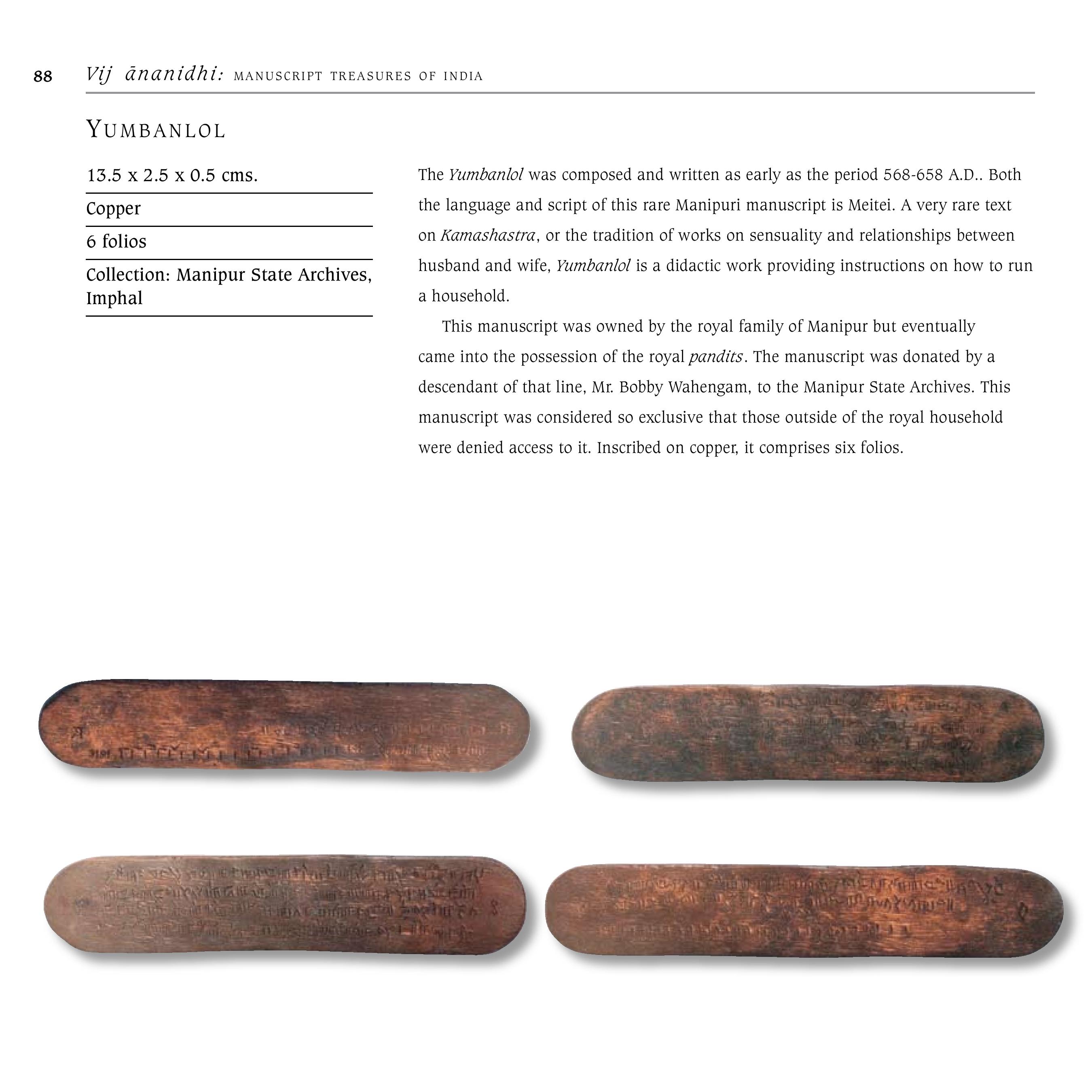
Meitei script
Template:Short description Script error: No such module "about".
Page Module:Message box/ambox.css has no content.Page Template:Multiple issues/styles.css has no content.
 | This article has multiple issues. Please help improve it or discuss these issues on the talk page. (Learn how and when to remove these messages)
Page Module:Message box/ambox.css has no content.
|
Page Module:Infobox/styles.css has no content.
| Meitei script | |
|---|---|
| Lua error in package.lua at line 80: module 'Module:InfoboxImage/data' not found. The Meitei Alphabet chart divided into the original 18, additional letters and lonsum characters | |
| Script type | |
Period | 6th-18th centuries AD,[1] revived 1930 – present |
| Direction | Lua error in package.lua at line 80: module 'Module:GetParameters' not found. |
| Official script | for Meitei language in India |
| Region | Script error: No such module "flag". |
| Languages | Meitei (Manipuri) language |
| Related scripts | |
Parent systems | |
Sister systems | Tibetan,[2][3][4] Lepcha, Khema, ʼPhags-pa, Marchen |
| ISO 15924 | |
| ISO 15924 | Page Template:Mono/styles.css has no content.Mtei Page Template:Mono/styles.css has no content.(337), Meitei Mayek (Meithei, Meetei) |
| Unicode | |
Unicode alias | Meetei Mayek |
| Meetei Mayek (Unicode block) | |
Template:Contains special characters
Lua error in package.lua at line 80: module 'Module:Sidebar/configuration' not found. The Meitei script (Template:Langx), also known as the Kanglei script (Template:Langx)[5] or the Kok Sam Lai script (Template:Langx), after its first three letters[6][7] is an abugida in the Brahmic scripts family used to write the Meitei language, the official language of Manipur, Assam and one of the 22 official languages of India. It is first known from engravings on 6th century CE coins and copper plate inscriptions,[8] as verified by the various publications of the National Sahitya Akademi.[1] It was used until the 18th century, when it was replaced by the Bengali alphabet. A few manuscripts survive. In the 20th century, the script was revived and is again being used.[9] Beginning in 2021, the Government of Manipur began to use the Meitei alongside the Bengali-Assamese script, per the Manipur Official Language (Amendment) Act, 2021.[10]
Since Meitei does not have voiced consonants, there are only fifteen consonant letters used for native words, plus three letters for pure vowels. Nine additional consonants letters inherited from Indic languages are available for writing loan words. There are seven vowel diacritics and a final consonant (Script error: No such module "IPA".) diacritic. The names of the twenty-seven letters are based on parts of the human body.[11]
History
Regarding epigraphic records, Meitei script appears in the Yumbanlol (Yumpanlol), composed in the 6th century C.E. It was a group of copper plate inscriptions about an ancient Meitei language literary work.[12][13]
The Old Manipuri script also appears on coins issued during the reigns of Meitei Kings, Ura Konthouba (c. 568-653 CE) and Ayangba (c. 821-910 CE). These coins are presently preserved in the Mutua Museum in Imphal.[1]
The origin of the official script of Manipur is derived from religious book Wakoklon Puya.[14] But, there has been some controversy regarding the origin of the Meitei script. The Meitei script is a Brahmic abugida. According to Singh (1962), an archaic form of the script had developed by the 11th century, and it was in use until the early 18th century, when it was replaced by the Bengali script.[15] By contrast, Tomba (1993) claims that the script is a development of c. 1930, with all supposedly older documents being deliberate forgeries.[16] According to K.S. Singh and Mahoharan (1993), as per the modifications of the phonemic distributions of Meitei language, the script belongs to the Tibetan group of scripts.[2]
The earliest stone inscription, found in the village of Khoibu, Manipur, is also believed to date to time of Ura Konthouba. This inscription is presently kept in the Manipur State Museum, Imphal.[1]
Another early copper plate Meitei inscription dates to the 8th century CE, inscribed during the reign of King Khongtekcha (c. 721 AD). It was discovered by scholar Yumjao from Phayeng in 1935. It is one of the earliest known examples of Meitei literature.[17][18][19]
A stone inscription found[year needed] at Khoibu in Tengnoupal district, of current Manipur state, contains royal edicts of king Senbi Kiyamba (d. 1508), representing the earliest portion of the Chietharol Kumbaba or Royal Chronicle of Manipur. It is one of the primary texts in the Meitei script.[20][better source needed]
Recent developments
In 1980, a modernized version of the writing system was approved by Manipuri law for use in educational institutions.[21][22] The modernised version of the Meitei script was encoded in Unicode in 2009.
in 2022, a joint meeting consensus of the Meetei Erol Eyek Loinasillol Apunba Lup, the All Manipur Working Journalists' Union and the Editors' Guild, Manipur agreed that Meitei language newspapers would switch from the Bengali script to the Meitei script from 15 January 2023.[23][24][25][26][27]
Letters
One of the unique features of this script is the use of body parts in naming the letters.[28] Every letter is named after a human body part in the Meitei language. For example, the first letter "kok" means "head"; the second letter "sam" means "hair"; the third letter "lai" means "forehead", and so on.[29] This association appears in the book Wakoklon Heelel Thilel Salai Amailon Pukok Puya, which details how each script originated received its nomenclature and which is widely considered to be the source of the Meitei script.[30] Some letters have a second form (lonsom) that is used at the end of a word and are used to indicate stop consonants.
In the traditional Meitei religion of Sanamahism Meitei letters and numerals are believed to be the creations of the supreme God.[31][32]
Primary letters
Additional consonants
Independent vowels
In Meitei Mayek, vowels are not listed separately before the consonants, unlike in most Brahmic scripts. Instead, they appear within the main sequence of the script, making it structurally different from scripts like Devanagari.
Independent vowels are used only when a word starts with a vowel, just like in most Indic scripts. Otherwise, vowels appear as diacritics attached to consonants.
Meitei Mayek has seven independent vowel letters, including ⟨ꯑ⟩, which is used as a default vowel carrier, similar to ⟨अ⟩ in Devanagari:
| Template:Letter | Template:Letter | Template:Letter | Template:Letter | Template:Letter | Template:Letter | Template:Letter |
Examples:
- ꯑꯣꯏꯅꯥ (oina) – ‘like ( comparatively ) / left'
- ꯑꯣꯖꯥ (oja) - 'teacher'
Since Meitei Mayek preserves independent vowels, it functions similarly to Brahmic scripts in terms of structure, even though the vowel ordering differs from most Indic alphabets.
Vowel diacritics
Syllables are written by adding vowel diacritics (cheitap eeyek) to consonants.
Numerals
| Template:Letter | Template:Letter | Template:Letter | Template:Letter | Template:Letter | Template:Letter | Template:Letter | Template:Letter | Template:Letter | Template:Letter |
Unicode
Meetei Mayek (Meitei script) was added to the Unicode Standard in October, 2009 with the release of version 5.2.
The Unicode block for the Meitei script is U+ABC0 – U+ABFF.
Characters for historical orthographies are part of the Meetei Mayek Extensions block at U+AAE0 – U+AAFF.
Software
Script error: No such module "Labelled list hatnote".
Meitei Mayek keyboards and other input methods are available at or supported by:
In popular culture
- The Living God: Medicine and The Ancient Meetei Civilization, 2015 documentary film
See also
Lua error in mw.title.lua at line 404: bad argument #2 to 'title.new' (unrecognized namespace name 'Portal').
- Meitei inscriptions
- List of Meitei-language newspapers
- Meetei Mayek (Unicode block)
- Meetei Mayek Extensions (Unicode block)
- Wikipedia:Meitei script display help
- Bengali–Assamese script
- Bengali alphabet
- Mayek (disambiguation)
Notes
Page Template:Reflist/styles.css has no content.
References
Page Template:Reflist/styles.css has no content.
- ^ a b c d Page Module:Citation/CS1/styles.css has no content.Datta, Amaresh (1987). Encyclopaedia of Indian Literature. Sahitya Akademi. p. 142. ISBN 978-81-260-1803-1.
- ^ a b Page Module:Citation/CS1/styles.css has no content.Chelliah, Shobhana Lakshmi (2011). A Grammar of Meithei. De Gruyter. p. 355. ISBN 9783110801118.
Meithei Mayek is part of the Tibetan group of scripts, which originated from the Gupta Brahmi script
- ^ Page Module:Citation/CS1/styles.css has no content.Singh, Harimohon Thounaojam (January 2011), The Evolution and Recent Development of the Meetei Mayek Script, Cambridge University Press India, p. 28
- ^ Page Module:Citation/CS1/styles.css has no content.Hyslop, Gwendolyn; Morey, Stephen; Post, Mark W (January 2011). North East Indian Linguistics Volume 3. Cambridge University Press India. ISBN 9788175967939.
- ^ Page Module:Citation/CS1/styles.css has no content.Noni, Arambam; Sanatomba, Kangujam (16 October 2015). Colonialism and Resistance: Society and State in Manipur. Routledge. pp. 223, 235, 237. ISBN 978-1-317-27066-9.
- ^ Page Module:Citation/CS1/styles.css has no content.মণিপুরদা লোলয়ান চঙলকপা অমদি মীতৈ ইয়েক্না থোঙজিন্দা ৱারৌজনা লেপ্লরবদা ! (PDF). hueiyenlanpao.com (in ꯃꯤꯇꯩ ꯂꯣꯟ).
- ^ Page Module:Citation/CS1/styles.css has no content."Lost and revived: The story of Meitei script". The Indian Express. 11 December 2022. Retrieved 29 January 2023.
- ^ Page Module:Citation/CS1/styles.css has no content.Fresh Fictions: Folk Tales, Plays, Novellas from the North East. Katha. 2005. p. 4. ISBN 978-81-87649-44-1.
- ^ Page Module:Citation/CS1/styles.css has no content.Laithangbam, Iboyaima (23 September 2017). "Banished Manipuri script stages a comeback". The Hindu. ISSN 0971-751X. Retrieved 25 August 2021.
- ^ Page Module:Citation/CS1/styles.css has no content."GAZETTE TITLE: The Manipur Official Language (Amendment) Act, 2021". manipurgovtpress.nic.in.
- ^ Page Module:Citation/CS1/styles.css has no content.Ray, Sohini (2009). "Writing the Body: Cosmology, Orthography, and Fragments of Modernity in Northeastern India". Anthropological Quarterly. 82 (1): 150. doi:10.1353/anq.0.0047. ISSN 0003-5491. JSTOR 25488260.
- ^ Page Module:Citation/CS1/styles.css has no content."National Mission of Manuscripts : 88 Vijñānanidhi: m a n". National Mission of Manuscripts. Manuscript Treasures of India, Ministry of Culture, Government of India. pp. 88, 89. Retrieved 29 April 2024.
{{cite web}}: CS1 maint: others (link) - ^ Page Module:Citation/CS1/styles.css has no content."Vijnananidhi". namami.gov.in. Ministry of Culture, Government of India. pp. 88, 89.
{{cite web}}: CS1 maint: others (link) - ^ Page Module:Citation/CS1/styles.css has no content.Ray, Sohini (2009). "Writing the Body: Cosmology, Orthography, and Fragments of Modernity in Northeastern India". Anthropological Quarterly. 82 (1): 129–154. doi:10.1353/anq.0.0047. ISSN 0003-5491. JSTOR 25488260.
The philosophy of the letters is found in a religious manuscript named "Wakoklon Hilel Thilel Salai Amilon Pukok Puya"
- ^ K.B. Singh, The Meiteis of Manipur (1989 [1962]), p. 157.
- ^ Frans Welman, Out of Isolation – Exploring a Forgotten World (2011), 468f., citing O.Tomba, The Need to rewrite Manipuri History, Imphal, 1993.
- ^ Page Module:Citation/CS1/styles.css has no content.Devi, Yumlembam Gopi (16 June 2019). Glimpses of Manipuri Culture. LP. p. 25. ISBN 978-0-359-72919-7.
- ^ Page Module:Citation/CS1/styles.css has no content.Paniker, K. Ayyappa (1997). Medieval Indian Literature: Surveys and selections (Assamese-Dogri). Sahitya Akademi. p. 325. ISBN 978-81-260-0365-5.
- ^ Page Module:Citation/CS1/styles.css has no content.Sen, Sipra (1992). Tribes and Castes of Manipur: Description and Select Bibliography. Mittal Publications. p. 28. ISBN 978-81-7099-310-0.
- ^ Page Module:Citation/CS1/styles.css has no content.Everson, Michael (20 September 2006). "Preliminary Proposal for Encoding the Meithei Mayek Script in the BMP of the UCS" (PDF). Unicode.
- ^ Page Module:Citation/CS1/styles.css has no content."Approved Meitei Mayek Govt Gazette 1980". e-pao.net. Retrieved 31 July 2019.
- ^ Page Module:Citation/CS1/styles.css has no content.Devi, S. (May 2013). "Is Manipuri an Endangered Language?" (PDF). Language in India. 13 (5): 520–533.
- ^ Page Module:Citation/CS1/styles.css has no content."Meetei Mayek in newspapers". www.thesangaiexpress.com. Retrieved 3 August 2022.
- ^ Page Module:Citation/CS1/styles.css has no content."Meetei Mayek in newspapers: 29th jan22 ~ E-Pao! Headlines". e-pao.net. Retrieved 3 August 2022.
- ^ Page Module:Citation/CS1/styles.css has no content."Meetei Mayek to Replace Bengali Script in Manipuri Newspapers from 2023". Pratidin Time. 30 January 2022. Retrieved 3 August 2022.
- ^ Page Module:Citation/CS1/styles.css has no content."All Bengali script Manipuri Dailies in Manipur to Print in Meitei Eyek (Script) from 15th January 2023". HYNews. Retrieved 3 August 2022.
- ^ Page Module:Citation/CS1/styles.css has no content."State dailies to cease Bengali script Manipuri papers from Jan, 2023: 29th jan22 ~ E-Pao! Headlines". e-pao.net. Retrieved 3 August 2022.
- ^ Page Module:Citation/CS1/styles.css has no content."A comparative study of Meetei Mayek" (PDF). typoday. Retrieved 13 May 2019.
- ^ Page Module:Citation/CS1/styles.css has no content."Atlas of Endangered Alphabets: Indigenous and minority writing systems, and the people who are trying to save them". 29 November 2018. Retrieved 6 March 2023.
The Meitei Mayek script has a unique built-in learning device: the use of body parts in naming the letters. Every letter is named after a human body part in the Manipuri. The first letter, "kok" means "head," for example; the second letter, "sam" means "hair"; the third letter "lai" means "forehead."
- ^ Page Module:Citation/CS1/styles.css has no content.Ray, Sohini (2009). "Writing the Body: Cosmology, Orthography, and Fragments of Modernity in Northeastern India". Anthropological Quarterly. 82 (1): 129–154. doi:10.1353/anq.0.0047. ISSN 0003-5491. JSTOR 25488260. S2CID 140755509.
- ^ Page Module:Citation/CS1/styles.css has no content."Discovery of Kangleipak 11". e-pao.net. Retrieved 8 March 2023.
- ^ Page Module:Citation/CS1/styles.css has no content."Discovery of Kangleipak 12". e-pao.net. Retrieved 8 March 2023.
- ^ a b Page Module:Citation/CS1/styles.css has no content."Manipuri (Meeteilon / Meithei)". Omniglot. Retrieved 28 March 2021.
- ^ Page Module:Citation/CS1/styles.css has no content.Arambarn Parratt, Saroj Nalini, ed. (2009), "Meetei Mayek or Meetei script chart", The Court Chronicle of the Kings of Manipur, Foundation Books, pp. 145–148, doi:10.1017/UPO9788175968547.006, ISBN 978-81-7596-854-7, retrieved 6 March 2023
{{citation}}: CS1 maint: work parameter with ISBN (link) - ^ Page Module:Citation/CS1/styles.css has no content.Watham, S.; Vimal, V. (2013). "Transliteration from Hindi Script to Meetei Mayek: ( A Rule Based Approach )". S2CID 16339978.
{{cite web}}: Missing or empty|url=(help) - ^ Page Module:Citation/CS1/styles.css has no content."Meetei Mayek: The Script". tabish.freeshell.org. Retrieved 6 March 2023.
- ^ Page Module:Citation/CS1/styles.css has no content."Meitei Mayek Alphabets". www.researchgate.net.
- ^ Page Module:Citation/CS1/styles.css has no content."Manipuri / Meitei Script Alphabet". www.omniglot.com. Retrieved 14 February 2024.
Bibliography
- Chelliah, Shobhana L. (1997). A grammar of Meithei. Berlin: Mouton de Gruyter. Template:ISBN.
- Chelliah, Shobhana L. (2002). Early Meithei manuscripts. In C. I. Beckwith (Ed.), Medieval Tibeto-Burman languages: PIATS 2000: Tibetan studies: Proceedings of the ninth seminar of the International Association of Tibetan Studies, Leiden 2000 (pp. 59–71). Leiden, Netherlands: Brill.
- Chelliah, Shobhana L. (2002). A glossary of 39 basic words in archaic and modern Meithei. In C. I. Beckwith (Ed.), Medieval Tibeto-Burman languages: PIATS 2000: Tibetan studies: Proceedings of the ninth seminar of the International Association of Tibetan Studies, Leiden 2000 (pp. 189–190). Leiden, Netherlands: Brill.
External links
Page Module:Side box/styles.css has no content.Page Template:Sister project/styles.css has no content.
- Omniglot, a guide to written language
- MANIPURI FONTS at Directorate of Language Planning and Implementation
Script error: No such module "navbox with collapsible groups".



_-_a_6th_century_Classical_Meitei_language_copper_manuscript_text_-_in_Meetei_script_-_works_on_sensuality_%26_relationship_between_husbands_%26_wives_and_how_to_run_a_household_in_Ancient_Kangleipak_civilisation_state.jpg)