Cota tinctoria
| Script error: No such module "Automated taxobox". | |
|---|---|
| Lua error in package.lua at line 80: module 'Module:InfoboxImage/data' not found. | |
Scientific classification 
| |
| Script error: No such module "Taxobox ranks".: | <div style="display:inline" class="script error: no such module "taxobox ranks".">Template:Taxon infoTemplate:Taxon italics |
| Binomial name | |
| Template:Taxon infoTemplate:Taxon italics | |
| Lua error in package.lua at line 80: module 'Module:InfoboxImage/data' not found. | |
| Synonyms | |
|
Synonymy
| |
Page Template:Taxobox/core/styles.css has no content.Template:Taxonbar/candidateTemplate:Speciesbox/parameterCheckScript error: No such module "Check for conflicting parameters".
.jpg)
Cota tinctoria, the golden marguerite, yellow chamomile, or oxeye chamomile, is a species of perennial flowering plant in the sunflower family. Other common names include dyer's chamomile, Boston daisy, and Paris daisy. In horticulture this plant is still widely referred to by its synonym Anthemis tinctoria.[2]
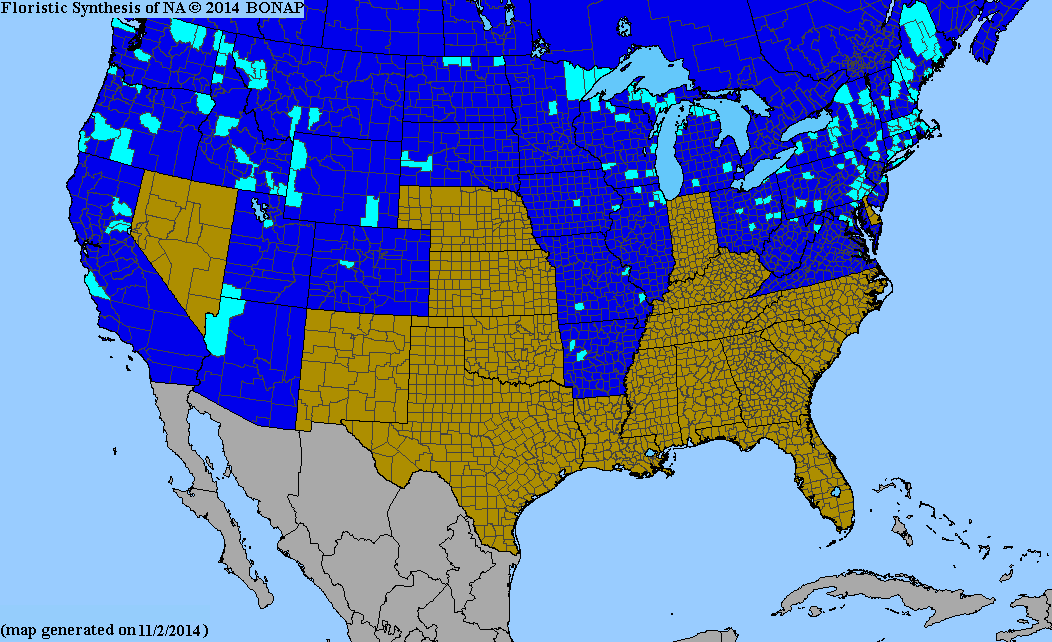
It is a short-lived plant often treated as biennial, native to Europe, the Mediterranean and Western Asia and naturalized in scattered locations in North America.[3][4] It has aromatic, bright green, feathery foliage. The serrate leaves are bi-pinnatifid (= finely divided) and downy beneath. It grows to a height of 60 cm (24 in).[5]
It has yellow daisy-like terminal flower heads on long thin angular stems, blooming in profusion during the summer.[5]
It has no culinary or commercial uses and only limited medicinal uses. However, it produces excellent yellow, buff and golden-orange dyes, used in the past for fabrics.[6]
Cota tinctoria is grown in gardens for its bright attractive flowers and fine lacy foliage; there is a white-flowering form. Under the synonym Anthemis tinctoria, the cultivar 'E.C. Buxton' has gained the Royal Horticultural Society's Award of Garden Merit.[7] The popular seed-raised cultivar 'Kelwayi' has 5 cm wide, yellow flowers on 65 cm plants.[8]
The species hybridizes with Tripleurospermum inodorum to form the hybrid × Tripleurocota sulfurea.[9]
Subspecies
- Cota tinctoria subsp. australis (R.Fern.) Oberpr. & Greuter
- Cota tinctoria subsp. euxina (Boiss.) Oberpr. & Greuter
- Cota tinctoria subsp. fussii (Griseb. & Schenk) Oberpr. & Greuter
- Cota tinctoria subsp. gaudium-solis (Velen.) Oberpr. & Greuter
- Cota tinctoria subsp. parnassica (Boiss. & Heldr.) Oberpr. & Greuter
- Cota tinctoria subsp. sancti-johannis (Stoj. & al.) Oberpr. & Greuter
- Cota tinctoria subsp. virescens (Bornm.) Oberpr. & Greuter
References
Page Module:Side box/styles.css has no content.Page Template:Sister project/styles.css has no content.
Page Template:Reflist/styles.css has no content.
- ^ Florae Siculae Synopsis 2: 866. 1844 [1845].
- ^ Page Module:Citation/CS1/styles.css has no content.RHS A–Z encyclopedia of garden plants. United Kingdom: Dorling Kindersley. 2008. p. 1136. ISBN 978-1405332965.
- ^ Altervista Flora Italiana, Camomilla dei tintori, Färberkamille, Cota tinctoria (L.) J. Gay includes many photos plus European distribution map
- ^ Biota of North America Program 2014 county distribution map
- ^ a b Flora of North America, Golden marguerite, yellow chamomile, Cota tinctoria (Linnaeus) J. Gay ex Gussone, Fl. Sicul. Syn. 2: 867. 1845.
- ^ Euro+Med PlantBase - the information resource for Euro-Mediterranean plant diversity
- ^ Page Module:Citation/CS1/styles.css has no content."RHS Plantfinder - Anthemis tinctoria 'E.C. Buxton'". Royal Horticultural Society. Retrieved 12 January 2018.
- ^ Page Module:Citation/CS1/styles.css has no content."Anthemis tinctoria 'Kelwayi'". Gardenia.net. Retrieved 12 July 2021.
- ^ Template:Cite POWO
Script error: No such module "Taxonbar".