Callicarpa
Template:Short description Script error: No such module "Redirect-distinguish". Template:DMCA Script error: No such module "Automated taxobox".
Callicarpa (beautyberry) Commonly known as beautyberry, is a genus of shrubs and small trees in the family Lamiaceae. They are native to east and southeast Asia (where the majority of the species occur), Australia, Madagascar, south-eastern North America and South America.[1]Template:R/superscript[2]Template:R/superscript
its leaves are simple, opposite, usually 5 to 25 cm long and its flowers are small, white to pink or light purple in color and its fruit called berres.
Description
Page Module:Message box/ambox.css has no content.
 |
The temperate species are deciduous, the tropical species evergreen. The leaves are simple, opposite, and 5–25 cm long. The flowers are in clusters, white to pinkish. The fruit is, in botanical terms, a berry up to 5 mm diameter. They are pink to red-purple with a highly distinctive metallic lustre, and are very conspicuous in clusters on the bare branches after the leaves fall. The berries last well into the winter or dry season and are an important survival food for birds and other animals, though they will not eat them until other sources are depleted. The berries are highly astringent but are made into wine and jelly. Callicarpa species are used as food plants by the larvae of some Lepidoptera species in Asia including Endoclita malabaricus and Endoclita undulifer.
Its leaves are simple, opposite, usually 5 to 25 cm long and its flowers are small, white to pink or light purple in color and its fruit called berres.
Wildly grown in gardens for its berries and used for food of animals and birds and store for winter seasons.
Some species used in medicines for fever and rheumatism. it also used for mosquito repellents.
Etymology
The Latin name callicarpa derives from the Greek κάλλος (kállos) 'beauty' and καρπός (karpós) 'fruit'.[3][4]
Selected species
Page Module:Message box/ambox.css has no content.
|
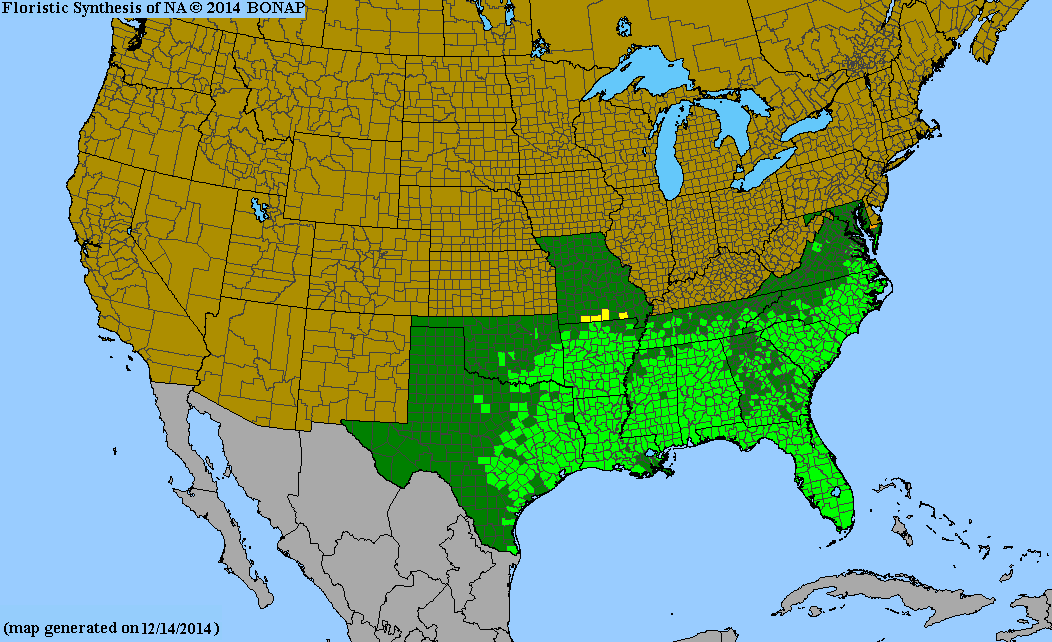
- Callicarpa americana (American beautyberry) is native to the southeastern United States.[5] It can typically reach 1 to 2 meters in height. A jelly can be made from its ripe berries. Ornamental varieties of Callicarpa americana have been bred to have pink or white berries.
- Callicarpa bodinieri (Bodinier's beautyberry)), native to west-central China (Sichuan, Hubei, Shaanxi), is more cold-tolerant than C. americana, and is the species most widely cultivated in northwestern Europe. It can reach 3 meters tall.
- Callicarpa japonica (Japanese beautyberry), native to Japan, is also cultivated in gardens. It is called Murasakishikibu in Japanese, in honor of Murasaki Shikibu.
- Callicarpa dichotoma (Purple beautyberry), native to Japan, China, and Korea.
Lua error in package.lua at line 80: module 'Module:Plain text' not found.
Uses
Insect repellent
American beautyberry has been used as a folk remedy to prevent mosquito bites.[6][7] Four chemicals isolated from Callicarpa have been shown to act as insect repellents:borneol,[8] callicarpenal, intermedeol, and spathulenol.[9] The use of callicarpenal has been patented by the United States Department of Agriculture's Agricultural Research Service as a mosquito repellent.[6]
Species
As of March 2026[update], Plants of the World Online accepts the following 164 species:[1]Template:R/superscript Script error: No such module "Template wrapper".
References
- ^ a b c d Page Module:Citation/CS1/styles.css has no content."Callicarpa L." Plants of the World Online. Royal Botanic Gardens, Kew. 2026. Retrieved 30 March 2026.
- ^ Page Module:Citation/CS1/styles.css has no content."Callicarpa L." Global Biodiversity Information Facility. 2026. Retrieved 30 March 2026.
- ^ Page Module:Citation/CS1/styles.css has no content."κάλλος". LSJ. Retrieved 13 May 2026.
- ^ Page Module:Citation/CS1/styles.css has no content."καρπός". LSJ. Retrieved 29 March 2026.
- ^ Biota of North America Program, 2013 county distribution map
- ^ a b Page Module:Citation/CS1/styles.css has no content."Learning from our elders: Folk Remedy Yields Mosquito-Thwarting Compound". Agricultural Research. Agricultural Research Service. 6 February 2006.
- ^ Scientists Confirm Folk Remedy Repels Mosquitoes University of Mississippi (ScienceDaily) July 3, 2006
- ^ Page Module:Citation/CS1/styles.css has no content."Species Information". sun.ars-grin.gov. Archived from the original on 10 November 2004. Retrieved 2 March 2008.
- ^ Page Module:Citation/CS1/styles.css has no content.Cantrell, C. L.; Klun, J. A.; Bryson, C. T.; Kobaisy, M.; Duke, S. O. (2005). "Isolation and Identification of Mosquito Bite Deterrent Terpenoids from Leaves of American (Callicarpa americana) and Japanese (Callicarpa japonica) Beautyberry". Journal of Agricultural and Food Chemistry. 53 (15): 5948–53. doi:10.1021/jf0509308. PMID 16028979.
External links
Page Module:Side box/styles.css has no content.Page Template:Sister project/styles.css has no content.
- Dr. Duke's Databases: Callicarpa americana - List of Chemicals
- Callicarpa info Script error: No such module "webarchive".
- Eat The Weeds - Beautyberry
Script error: No such module "Taxonbar".