Fingertips
Template:Short description Script error: No such module "about".
Page Template:Hlist/styles.css has no content.Page Template:Plainlist/styles.css has no content.Page Module:Infobox/styles.css has no content.
| "Fingertips" | ||||
|---|---|---|---|---|
| Lua error in package.lua at line 80: module 'Module:InfoboxImage/data' not found. | ||||
| Template:Infobox song/link by Little Stevie Wonder | ||||
| from the album The 12 Year Old Genius | ||||
| A-side | "Fingertips – Part 1" | |||
| B-side | "Fingertips – Part 2" | |||
| Released | May 21, 1963 | |||
| Recorded | June 1962 | |||
| Venue | Regal Theater, Chicago | |||
| Genre | R&B, soul | |||
| Length | Script error: No such module "hms". | |||
| Label | Tamla T 54080 | |||
| [[Songwriter|SongwriterTemplate:Pluralize from text]] | Clarence Paul, Henry Cosby | |||
| [[Record producer|ProducerTemplate:Pluralize from text]] | Berry Gordy, Jr. | |||
| Stevie Wonder singles chronology | ||||
| ||||
| Script error: No such module "Unsubst-infobox". | ||||
Script error: No such module "Check for conflicting parameters".
"Fingertips" is a 1963 hit single recorded live by "Little" Stevie Wonder for Motown's then Tamla label.[1]
Overview
Written and composed by Wonder's mentors, Clarence Paul and Henry Cosby, "Fingertips" was originally a jazz instrumental recorded for Wonder's first studio album, The Jazz Soul of Little Stevie. The live version of the song was recorded in 1963 during a Motortown Revue performance at the Regal Theater in Chicago, Illinois.[2] Containing only a few stanzas of improvised lyrics, "Fingertips" is essentially an instrumental piece, meant to showcase Wonder's talents on the bongos and the harmonica.
"Part 2"
The edit point that begins "Part 2" of "Fingertips" is when Wonder shouts "Everybody say 'yeah!'", initiating a call-and-response exchange with the audience. After a couple of sung verses, each followed by Wonder's brief harmonica playing (solos accompanied only by the audience's rhythmic clapping),[1] Wonder appears to bring things to a conclusion, right after slyly (and humorously) playing a line of "Mary Had A Little Lamb" on his harmonica, making everyone laugh. On the night of the recording, Wonder, as usual started to leave the stage and the band went into the exit music, as musician and emcee Bill Murray (known professionally as Winehead Willie)[3] exhorted the crowd to "give him a hand"; however, Wonder unexpectedly changed his mind, returning to sing the "goodbye" encore. The other musicians were caught out, and the bass players had changed over to prepare for the next act on the bill, Mary Wells.[4] As Wonder moves into his impromptu encore, the new bass player, Joe Swift, having replaced Larry Moses, can be heard on the recording, yelling out: "What key? What key?"[1][5]
Release
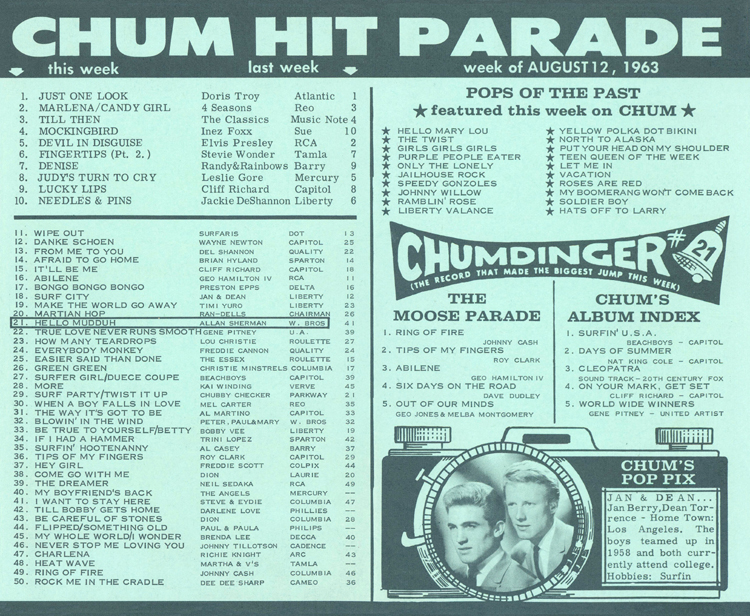
The live version of "Fingertips" was released on May 21, 1963, as a two-part single, with Part 2 (with the encore) as the B-side. The 707 mono features "Sunset" and "Contract on Love". By August, the single B-side had reached the top of both the Billboard Pop Singles and R&B Singles charts.[6] "Fingertips" was Motown's second number-one pop hit (following The Marvelettes' "Please Mr. Postman"), and launched the then 13-year-old Wonder to prominence. The single's success helped Wonder's live album, Recorded Live: The 12 Year Old Genius, reach number-one on the Billboard Pop Albums chart, making him the youngest artist to accomplish that feat.[7] Because of Part 2's success, it would later feature on various compilation albums just as the full recording. In Canada the song reached number 6.[8]
Both the studio and live versions of the song featured drumming by Marvin Gaye, who had been playing drums for Wonder and other Motown artists and would become a big Motown star in his own right.[9]
Personnel
- Vocals, bongos, and harmonica by Little Stevie Wonder
- Drums by Marvin Gaye
- Bass by James Jamerson, Larry Moses, Joe Swift
- Horn Arrangement by Johnny Allen
- Recording engineer, Ron Steele Sr.
In popular culture
The song is used in trailers for Jordan Peele's movie Nope.[10] as well as in More American Graffiti.
References
Page Template:Reflist/styles.css has no content.
- ^ a b c Stevie Wonder interviewed on the Pop Chronicles (1969)
- ^ Page Module:Citation/CS1/styles.css has no content.Semmes, C. (2 April 2006). The Regal Theater and Black Culture. Palgrave Macmillan US. pp. 187–. ISBN 978-1-4039-8330-5.
- ^ Page Module:Citation/CS1/styles.css has no content.Posner, Gerald (April 2, 2009). "Battle of the Stars". Motown: Music, Money, Sex, and Power. Random House. p. 99. ISBN 9780307538628. Retrieved November 9, 2016 – via Google Books.
- ^ Page Module:Citation/CS1/styles.css has no content.Sexton, Paul (June 22, 2019). "Stevie Wonder Makes Hot 100 Debut By His 'Fingertips'". udiscovermusic.
- ^ Page Module:Citation/CS1/styles.css has no content.Tenley Williams (January 1, 2002). Stevie Wonder. Infobase Publishing. p. 28. ISBN 9781438122632.
- ^ Page Module:Citation/CS1/styles.css has no content.Whitburn, Joel (2004). Top R&B/Hip-Hop Singles: 1942–2004. Record Research. p. 803.
- ^ Page Module:Citation/CS1/styles.css has no content."Stevie Wonder". Motown. Retrieved 2025-02-16.
- ^ Page Module:Citation/CS1/styles.css has no content."CHUM Hit Parade - August 12, 1963".
- ^ Page Module:Citation/CS1/styles.css has no content.MacDonald, Les (8 July 2010). The Day the Music Died. Xlibris Corporation. pp. 226–. ISBN 978-1-4691-1356-2.
- ^ Page Module:Citation/CS1/styles.css has no content.Grobar, Matt (February 13, 2022). "Nope: Watch Super Bowl Ad". Deadline Hollywood. Retrieved February 14, 2022.
External links
- Little Stevie Wonder: Fingertips at Discogs (list of releases)
Lua error in package.lua at line 80: module 'Module:Navbox/configuration' not found.
Lua error in package.lua at line 80: module 'Module:Authority control/config' not found.