Prix Blumenthal
Template:Short descriptionPage Module:Infobox/styles.css has no content.
| Prix Blumenthal | |
|---|---|
| Awarded for | To aid young French artists financially, and draw the United States and France closer together |
| Country | Script error: No such module "WikidataIB". |
| Presented by | Script error: No such module "WikidataIB". |
| First award | 1919 |
| Final award | 1950s? |
| Website | Script error: No such module "WikidataIB". |
Script error: No such module "Check for conflicting parameters".
The Prix Blumenthal (or Blumenthal Prize) was a grant or stipend awarded through the philanthropy of Florence Meyer Blumenthal (1875–1930) – and the foundation she created, Fondation franco-américaine Florence Blumenthal (Franco-American Florence Blumenthal Foundation) – to discover young French artists, aid them financially, and in the process draw the United States and France closer together through the arts.[1]
Winners were designated by seven juries in the fields of the literature, painting, sculpture, decorative arts, structure, engraving and music – to receive a purse of six thousand francs per year, given for two years. The purse increased in 1926 until Blumenthal's death in 1930 to ten thousand francs for two years.
History
Beginning in 1919 the foundation awarded nearly two hundred grants, and on April 11, 1937, the Prix Blumenthal was declared d'utilité publique ("of public service"), giving it a special tax classification.[2] Awards were given through 1954.[1] At the time of the foundation's dissolution in 1973[2] it was under the direction of Georges Huisman, director of the école des Beaux-Arts, along with author André Maurois and novelist Roland Dorgelès.[2]
In 2010 (May 14 – June 5), the Médiathèque of Haguenau hosted an exhibit of the Florence Blumenthal archives.[2]
Jurors and leadership
Jurors included philosopher Henri Bergson; novelist Roland Dorgelès; novelist, essayist, diplomat and playwright Jean Giraudoux; writer Anna de Noailles; poet and essayist Paul Valéry; painter Paul Signac,[1] painter and printmaker Édouard Vuillard, sculptor Paul Landowski, painter and sculptor Aristide Maillol,[1] architect Auguste Perret, composer Paul Dukas, composer Maurice Ravel and composer/conductor Guy Ropartz.[3]
Composer Georges Migot served as vice-president and subsequently as president (1931–1935)[2] of the foundation, as well as the archivist of the winners.[2]
Florence Meyer Blumenthal
Script error: No such module "Labelled list hatnote". Florence Meyer Blumenthal had married international financier George Blumenthal in 1898 [1] and in 1919, she organized what was originally called the La Fondation américaine Blumenthal pour la pensée et l’art français (American Foundation for French Art and Thought) – a name suggested by her friend, Paul Valéry, the poet and essayist[2] – and what ultimately became Fondation franco-américaine Florence Blumenthal.
Blumethal's younger brother Eugene Meyer Jr. later become the president and publisher of The Washington Post[1] – and was the father of Katharine Graham, editor of The Washington Post during Watergate.[4] She was also related to Levi Strauss through her sisters.[5]
In 1925, Blumenthal moved to Paris with her husband, later donating large sums to the Children's Hospital in Paris, the Metropolitan Museum of Art in New York and the Sorbonne in Paris. Blumenthal died in Paris in 1930, at age fifty-five,[1] having won, along with her husband, the French Legion of Honor the previous year.[1]
Impact of the Prix
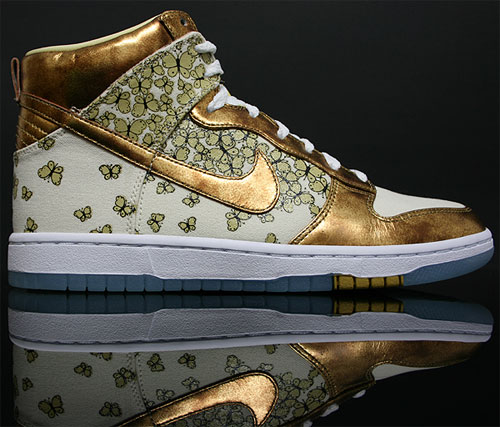
As an example of the impact of the Prix Blumenthal, textile artist Paule Marrot received the stipend in 1928, which allowed Marrot to open her workshop in Batignolles on rue Truffaut – where she became widely known for furniture textiles.[6] Marrot went on to experience strong popularity and commercial success in the U.S. after World War II, made a strong impact at Renault by pioneering the company's textile and color division, and redefined furnishing fabrics in France. In 1952 Marrot was awarded the French Légion d'honneur (Legion of Honor), (Chevalier) – and her textiles continue under license to diverse companies including Nike, Anthropologie and the handbag maker, Hayden-Harnett.[6][7][8]
Recipients
Partial list, by year of award: Script error: No such module "Template wrapper".
References
Page Module:Side box/styles.css has no content.Page Template:Sister project/styles.css has no content.
Page Template:Reflist/styles.css has no content.
- ^ a b c d e f g h Page Module:Citation/CS1/styles.css has no content."Florence Meyer Blumenthal". Jewish Women's Archive, Michele Siegel.
- ^ a b c d e f g h i j Page Module:Citation/CS1/styles.css has no content."Exposition d'archives de l'Association Florence Blumenthal". la médiathèque de Haguenau.
- ^ Page Module:Citation/CS1/styles.css has no content.Tilles, Rebecca (2021). "The Artistic Patronage and Transatlantic Connections of Florence Blumenthal". 19: Interdisciplinary Studies in the Long Nineteenth Century (31): 1–29.
- ^ Page Module:Citation/CS1/styles.css has no content."Paris, France: La Maison Blumenthal" (PDF). casavant.ca. Archived from the original (PDF) on 2011-07-27.
- ^ Page Module:Citation/CS1/styles.css has no content."Catalogue of the Art Collection George & Florence Blumenthal". RAantiques.com. Archived from the original on 2012-03-09.
By today's standards, George and Florence Blumenthal would definitely be considered a power couple. With palatial homes in New York and Paris, and Mediterranean yachting vacations, the Blumenthals lived vibrantly in a vibrant time. In her autobiography, retired Washington Post editor Katharine Graham described her aunt, Florence Blumenthal, as her father's much-loved sister with the perfect figure. Known as Florie to the family, she was known for bringing home massive amounts of clothing from Paris. She was also related to the powerful Levi Strauss family through her older sisters, Rosalie and Elise, each of whom had married a nephew of Strauss'. Eccentric and generous, Mrs. Blumenthal endowed the Franco-American Foundation's Florence Blumenthal Prize, and had a street named for her in Paris.
- ^ a b Page Module:Citation/CS1/styles.css has no content."About Paule Marrot". Hayden Harnett, Haydenharnett.com.
- ^ Page Module:Citation/CS1/styles.css has no content."Clayton Marcus chair for Rowe Furniture using Marrot Print". Furniture.about.com. 2013-07-14. Archived from the original on 2013-05-13. Retrieved 2013-10-10.
- ^ Page Module:Citation/CS1/styles.css has no content."Nike shoe using Marrot Print". Retrieved 2013-10-10.
- ^ Page Module:Citation/CS1/styles.css has no content."Eloge de Bordeaux Trésors d'une collection". Galerie des beaux-arts, Bordeaux. Archived from the original on 2012-03-09. Retrieved 2010-07-16.
BUTHAUD, René (Saintes, 1886 - 1986, Bordeaux) Fils d'un Bordelais, René Buthaud se fixe à Bordeaux dès son plus jeune âge où il est d'abord élève de Paul Quinsac, puis étudie à l'Ecole des Beaux-arts de Paris dans la classe de Gabriel Ferrier. Il reçoit une formation de peintre et de graveur et, est second Prix de Rome de gravure en taille douce en 1914. Démobilisé en 1918 pour des raisons de santé, il commence alors sa carrière de céramiste après en avoir appris les rudiments chez un potier durant la guerre. L'obtention du Prix de Florence Blumenthal, en 1921, lui permet de faire un stage à la maison L'Hospier à Golfe-Juan, où il perfectionne sa connaissance des émaux. Il expose dès 1920 chaque année au Salon des Artistes décorateurs et au Salon d'Automne. Entre 1923 et 1926, il dirige l'usine Primavera, fondée par René Guilleré à Sainte Radegonde, près de Tours. De 1928 à 1964, il présente ses céramiques à la maison Rouard à Paris. La ville de Bordeaux lui fait plusieurs commandes officielles : en 1937, il réalise les vases en mosaïque pour le Palais des sports et les bas-reliefs en plâtre des quatre saisons pour la mairie du Bouscat; au début des années cinquante, il refait en faïence le grand cadran de l'horloge du Palais de la Bourse; en 1951, il conçoit deux vitraux pour la maison du Vin et des bas-reliefs pour la façade d'une école. Il est nommé, en 1931, professeur des arts décoratifs à l'école des Beaux-arts de Bordeaux, au sein de laquelle il crée un atelier de céramique en 1955
- ^ Page Module:Citation/CS1/styles.css has no content."André FRAYE". Ministère de l'Ecologie. Archived from the original on 9 February 2015. Retrieved 9 February 2015.
- ^ Page Module:Citation/CS1/styles.css has no content."La Lettre" (PDF). Institut Mémoires de l’édition contemporaine. Retrieved 9 January 2015.[permanent dead link]
- ^ Page Module:Citation/CS1/styles.css has no content."Jean Adnet". Camu Gallery. Archived from the original on 2010-05-11.
- ^ Page Module:Citation/CS1/styles.css has no content."Paul charlemagne "chambre de musique"". Papillongallery.com.
- ^ Page Module:Citation/CS1/styles.css has no content."Maurice Brianchon". Rogallery.com.
- ^ Page Module:Citation/CS1/styles.css has no content."Maurice Brianchon Biography". Artnet.
- ^ a b c d e f g h i j Page Module:Citation/CS1/styles.css has no content."School of Paris: the painters and the artistic climate of Paris since 1910". 1960. Retrieved 8 February 2015.
- ^ Page Module:Citation/CS1/styles.css has no content."D'une nécéssité aux prototypes "109"..." Dauphinomaniac.
- ^ Page Module:Citation/CS1/styles.css has no content."Art Deco at the French Embassy: Robert Cami". Ambassade de France, French Embassy of Canada. Archived from the original on 2011-07-22.
- ^ Page Module:Citation/CS1/styles.css has no content."l'université de Caen". Retrieved 9 February 2015.
- ^ Page Module:Citation/CS1/styles.css has no content."COUTURIER Robert". Galerie Martel Greiner. Retrieved 9 February 2015.
- ^ Page Module:Citation/CS1/styles.css has no content."Paul Pouchol, le potier de Saint-Germain-des-Prés1" (PDF). Amis de Sevres, Friends of Sevres.
- ^ Page Module:Citation/CS1/styles.css has no content."Eugene Dabit". Editions Sillage.
- ^ Page Module:Citation/CS1/styles.css has no content."FERROUD, Pierre-Octave". personenencyclopedie.info. Archived from the original on 2011-07-21.
- ^ Page Module:Citation/CS1/styles.css has no content."LAMBERET, Madeleine". Dictionnaire des Militates Anarchistes. Retrieved 9 February 2015.
- ^ Page Module:Citation/CS1/styles.css has no content."Henri Mahé (1907–1975) Chronologie". Louisferdinandceline.free.fr.
- ^ Page Module:Citation/CS1/styles.css has no content."HUBERT YENCESSE". Galerie Gabrielle Laroche. Retrieved 9 February 2015.
- ^ Page Module:Citation/CS1/styles.css has no content."André Leon Arbus". Antique Marks, Antique-Marks.com.
- ^ Page Module:Citation/CS1/styles.css has no content."Corbin, Raymond (born 1907), sculptor, medallist". Oxford Index. doi:10.1093/gao/9781884446054.article.T019425. Retrieved 8 February 2015.
- ^ Page Module:Citation/CS1/styles.css has no content."Maurice Duruflé". Brentwood Choirs Festival. Retrieved 8 February 2015.
- ^ Page Module:Citation/CS1/styles.css has no content."Obélisque oblique". Art public. Retrieved 8 February 2015.
- ^ Page Module:Citation/CS1/styles.css has no content."Jean-René Bazaine". Kunstbus.nl.
- ^ Page Module:Citation/CS1/styles.css has no content."Émile Damais". Retrieved 9 February 2015.
- ^ Page Module:Citation/CS1/styles.css has no content."Sa vie et son oeuvre : Guy Montis Figure libre de la peinture". Montis.fr.
- ^ Page Module:Citation/CS1/styles.css has no content."L'Humanité". 25 October 1986.
- ^ Page Module:Citation/CS1/styles.css has no content."Bernard Cathelin, Biography". Cathelin.com.
- ^ Page Module:Citation/CS1/styles.css has no content.Randel, Don. The Harvard Biographical Dictionary of Music. p. 637.