Radical 15
Page Module:Infobox/styles.css has no content.
| Script error: No such module "Lang". | |
|---|---|
| Template:Succession links | |
| Script error: No such module "Lang". (U+51AB) "ice" | |
| Pronunciations | |
| Pinyin: | bīng |
| Bopomofo: | ㄅ一ㄥ |
| Wade–Giles: | ping1 |
| Cantonese Yale: | bing1 |
| Jyutping: | bing1 |
| Pe̍h-ōe-jī: | peng |
| Japanese Kana: | Script error: No such module "Lang". (on'yomi) Script error: No such module "Lang". (kun'yomi) |
| Sino-Korean: | 빙 bing |
| Hán-Việt: | băng |
| Names | |
| Chinese name(s): | Script error: No such module "Lang". |
| Japanese name(s): | Script error: No such module "Lang". |
| Hangul: | 얼음 eoreum |
| Stroke order animation | |
| Script error: No such module "Lang". | |
Radical 15 or radical ice (Script error: No such module "Lang".), meaning ice, is one of 23 of the 214 Kangxi radicals that are composed of 2 strokes.
In the Kangxi Dictionary, there are 115 characters (out of 49,030) to be found under this radical.
Script error: No such module "Lang". is also the 18th indexing component in the Table of Indexing Chinese Character Components predominantly adopted by Simplified Chinese dictionaries published in mainland China.
Evolution
-
Bronze script character
-
Large seal script character
Note that in modern Traditional Chinese, Simplified Chinese and Japanese, radical ice in some characters (e.g. Script error: No such module "Lang"., Script error: No such module "Lang".) is now written as two dots. Their original forms are retained in Korean hanja and some old Traditional Chinese typefaces (e.g. Script error: No such module "Lang"., Script error: No such module "Lang".).
Derived characters
| Strokes | Characters |
|---|---|
| +0 | 冫 |
| +3 | 冬 冭 冮 冯SC (=馮 -> 馬) |
| +4 | 冰 (ice[1]) 冱 冲SC/variant (沖 -> 水 / 衝 -> 行) 决SC/variant (=決 -> 水) 冴 |
| +5 | 况SC/variant (=況 -> 水, condition[1]) 冶 冷 冸 冹 冺 |
| +6 | 冻SC (=凍, to freeze[1]) 冼 冽 冾 冿 净SC (=淨 -> 水, clean) |
| +7 | 凁 凂 凃 |
| +8 | 凄 凅 准 凇 凈 (=淨 -> 水) 凉SC/variant (=涼 -> 水, cool) 凊 凋 凌 凍 凎 |
| +9 | 减SC/variant (=減 -> 水, reduce) 凐 凑SC/variant (=湊 -> 水, gather) |
| +10 | 凒 凓 凔 凕 凖 (=準 -> 水) |
| +11 | 凗 |
| +12 | 凘 |
| +13 | 凙 凚 凛SC/JP variant 凜TC variant |
| +14 | 凝 凞 |
| +15 | 凟 |
In both Unihan database and mainland China's standard,[2] the Simplified Chinese character 习 (=習) falls under radical second (Unihan: Script error: No such module "Lang"., China: Script error: No such module "Lang". or its variant form Script error: No such module "Lang".) instead of radical ice.
Literature
- Page Module:Citation/CS1/styles.css has no content.Fazzioli, Edoardo (1987). Chinese calligraphy : from pictograph to ideogram : the history of 214 essential Chinese/Japanese characters. calligraphy by Rebecca Hon Ko. New York: Abbeville Press. ISBN 0-89659-774-1.
- Leyi Li: “Tracing the Roots of Chinese Characters: 500 Cases”. Beijing 1993, Template:ISBN
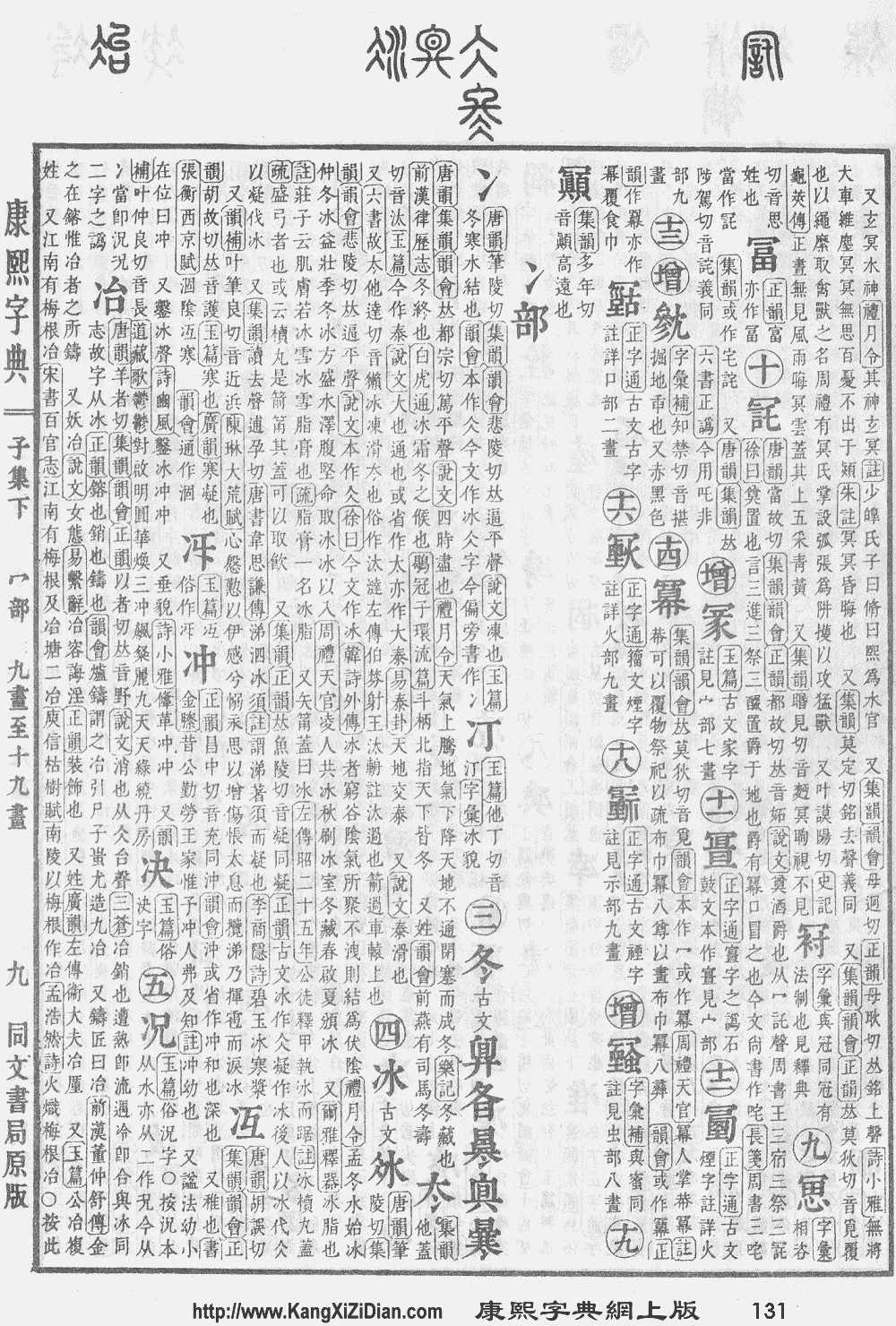
- KangXi: page 131, character 15
- Dai Kanwa Jiten: character 1607
- Dae Jaweon: page 294, character 11
- Hanyu Da Zidian: volume 1, page 295, character 1
References
- ^ a b c Page Module:Citation/CS1/styles.css has no content."Learn more "Ice" Radical Related Chinese Characters -". DigMandarin. 2016-03-22. Retrieved 2017-10-27.
- ^ GB13000.1字符集汉字部首归部规范 Specification for Identifying Indexing Components of GB 13000.1 Chinese Characters Set [sic]
External links
Page Module:Side box/styles.css has no content.Page Template:Sister project/styles.css has no content.
Lua error in package.lua at line 80: module 'Module:Navbox/configuration' not found. Template:Simplified Chinese radicals